Compare cedar, aspen, hemlock, spruce and other sauna wood types. Find the best wood for outdoor saunas, indoor cabins, and benches at every budget.
What type of wood is used in saunas? A well-designed sauna requires wood that stays comfortable against bare skin, handles extreme heat and humidity, and resists warping.
Because of these unique demands, a single sauna often uses multiple wood species—one for the weather-resistant outdoor sauna exterior, one for the interior walls, and another for the benches.
To help you build or buy the perfect sweat lodge, we’ve broken down the 8 best sauna wood types, their costs, and where they work best.
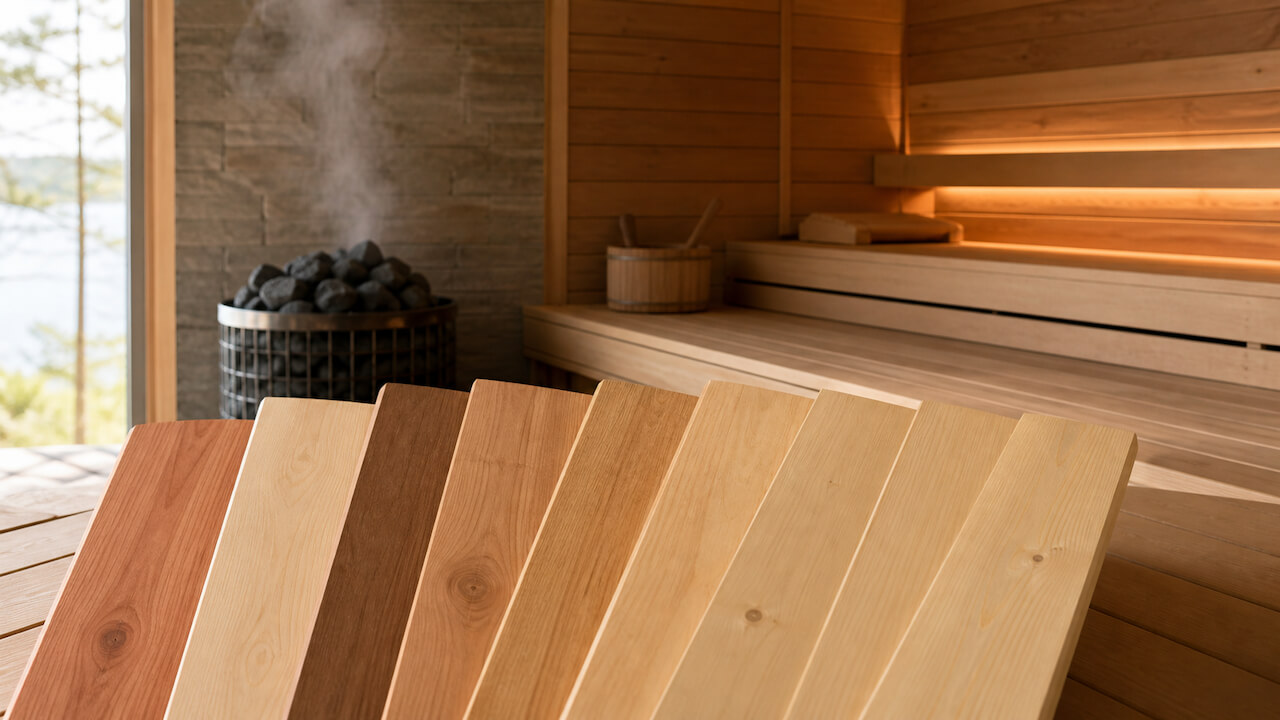
Top 8 Sauna Wood Types: Characteristics & Best Uses
Instead of reading through dense paragraphs, here is the direct breakdown of the 8 most popular sauna woods, their standout features, and exactly where they should be installed.
1. Cedar Wood for Sauna Construction
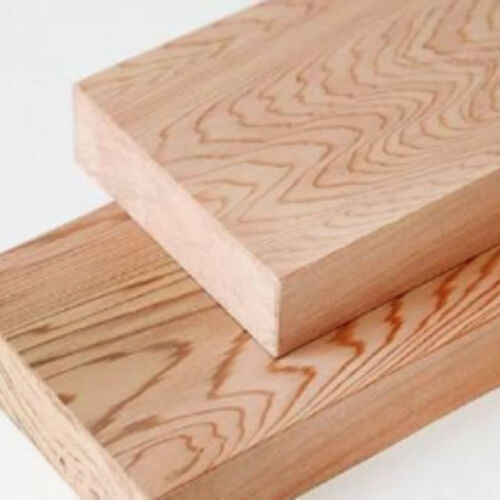
Western red cedar is one of the most versatile sauna wood types. It has good natural resistance to moisture and decay, remains relatively comfortable to touch and gives the room its recognizable cedar aroma.
Cedar is particularly suitable for:
- Outdoor cedar sauna walls
- Traditional indoor saunas
- Outdoor sauna types like cedar barrel sauna kits
- Doors, trim and exterior cladding
- Premium cedar infrared sauna cabins
2. Aspen Wood for Sauna Interiors
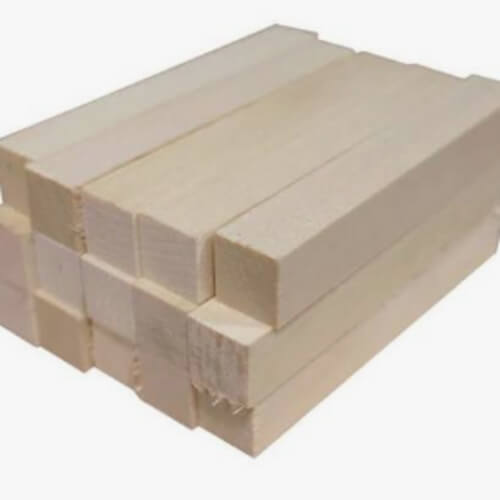
Aspen wood for sauna benches is popular because it is pale, smooth, low in resin and relatively neutral in scent. It is comfortable for skin-contact surfaces such as benches, backrests and heater guards.
Untreated aspen is not as naturally decay-resistant as cedar, so good ventilation and drying remain important. It is better suited to the protected interior than to an unprotected outdoor façade.
3. Thermo-Aspen and ThermoWood for Sauna Use
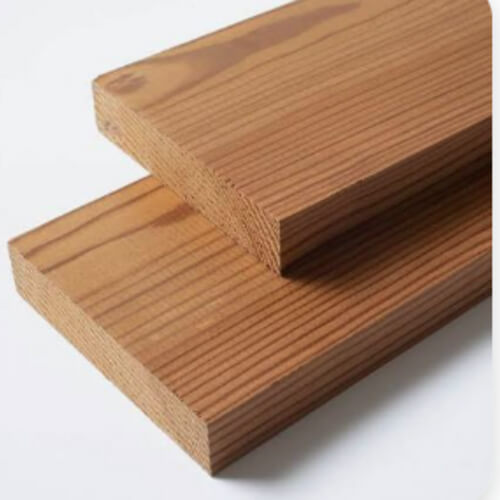
Thermo aspenwood has been modified using controlled heat. This reduces moisture movement and improves dimensional stability while giving the wood a rich brown colour.
Compared with ordinary aspen, thermo-aspen generally offers:
- Better resistance to swelling and shrinking
- Greater stability during repeated sauna cycles
- A darker, premium appearance
- Low resin and minimal aroma
However, a thermo-aspen sauna can increase overall outdoor sauna costs than one built with ordinary aspen or spruce.
4. Hemlock Wood for Sauna Cabins
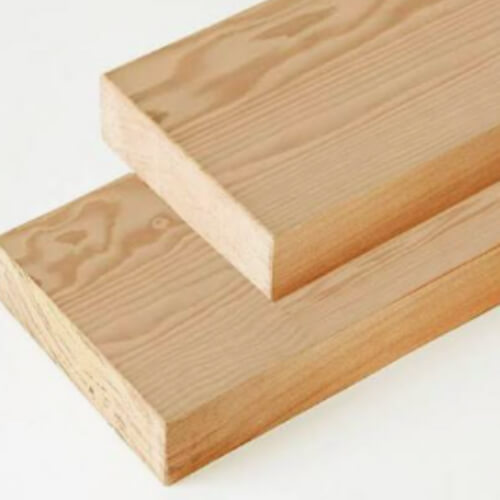
Canadian hemlock wood has a straight, light-coloured grain and a much milder scent than cedar. It is widely used in prefabricated and infrared sauna cabins because it offers a good balance of appearance, stability and price.
A Canadian hemlock sauna is normally best indoors. Hemlock does not have cedar’s level of natural decay resistance, so exposed outdoor use requires proper outdoor sauna installation and weatherproofing.
5. Spruce Wood for Sauna Walls
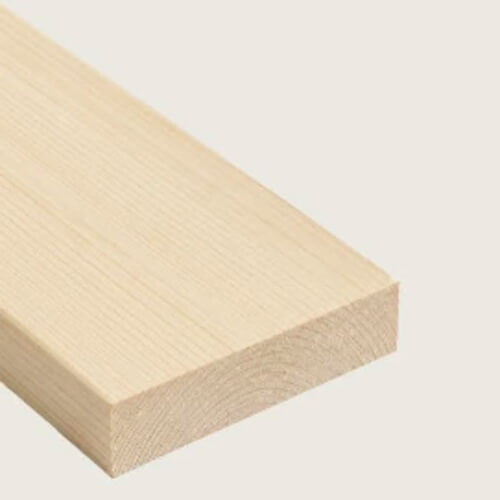
Nordic spruce is a classic Finnish sauna wood type, particularly for wall and ceiling cladding. It creates a light, traditional appearance and is often less expensive than clear cedar or thermo-aspen.
Spruce sauna wood may contain knots and resin pockets. Choose dry sauna-grade paneling, and reserve the clearest boards for areas people may touch.
6. Alder Wood for Sauna Benches
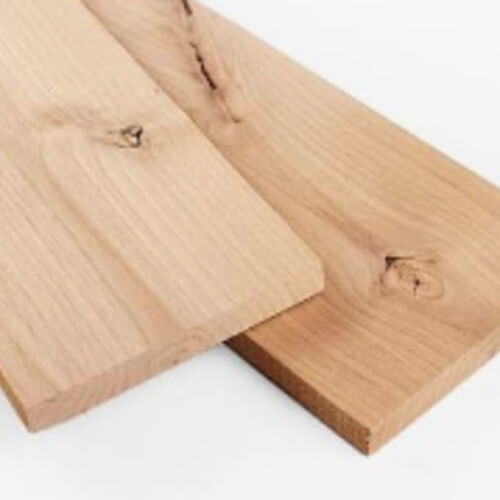
Alder sauna timber has a smooth texture, low resin content and warm reddish colour. It works well for benches, backrests, walls and decorative details.
7. Basswood for Sauna Seating
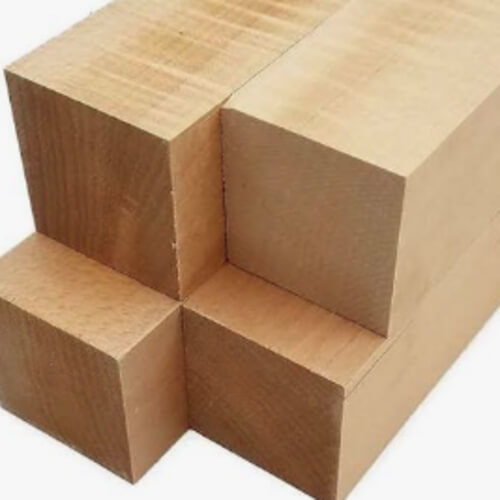
Basswood is light, fine-grained and nearly scent-free. Its comfortable surface makes it especially popular in infrared saunas and for users who dislike the aroma of cedar.
It is not the strongest choice for an exposed outdoor structure, but it performs well on protected interior benches and backrests.
8. Pine Wood for a Sauna
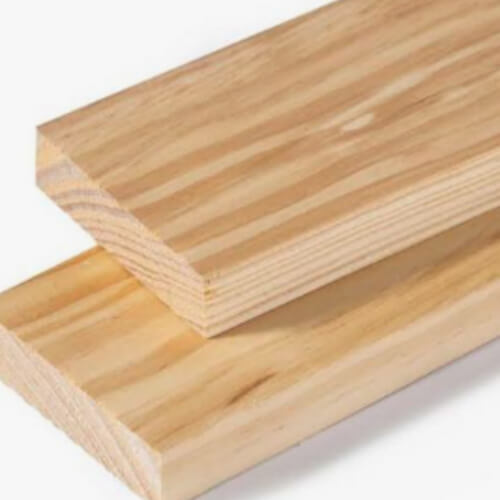
Pine is often the cheapest wood for sauna walls because it is widely available. However, low price alone does not make every pine board sauna-ready.
Knotty or resin-rich pine may release sap and develop hot spots. Pine is therefore better for framing, protected wall cladding or budget builds than for the upper bench where bare skin makes contact.
How to Choose the Right Wood for Your Sauna?
There is no single "best" wood for every project, but there are rules. Above all, grade matters almost as much as species. Before ordering, evaluate your needs based on these 3 factors:
Location (Outdoor vs. Indoor)
If the wood is exposed to the elements, you need natural durability. Western Red Cedar or exterior-rated ThermoWood are the best choices for outdoor shells.
Surface Contact (Walls vs. Benches)
Walls can be made of aromatic woods or knotty spruce. Benches must be made of low-thermal-conductivity, sap-free woods like Aspen, Alder, or Basswood so you don't burn your skin.
Budget Strategy
You don’t need premium wood everywhere. Use standard insulated framing, clad the walls in affordable Nordic spruce or hemlock, and save your budget for premium clear Aspen purely for the benches.
Why Buy a Sauna From Sipher Saunas?
Knowing what type of wood to use in saunas is only half the battle—expert craftsmanship is what makes it last a lifetime.
At Sipher Saunas, we don’t compromise on materials. Whether you are looking for a compact 2 person cedar sauna, a health-boosting cedar infrared sauna, or a stunning outdoor cedar sauna for your backyard oasis, we deliver unmatched quality.
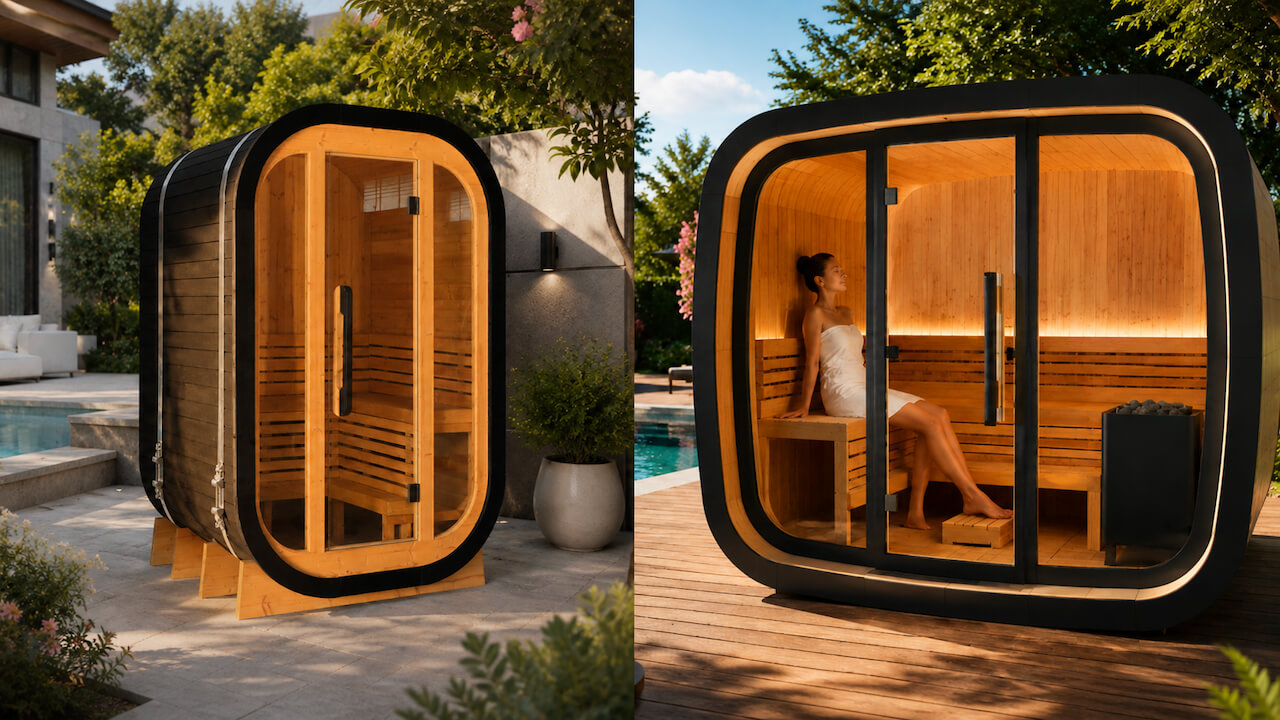
When you choose Sipher Saunas, you get:
- Premium Wood Selection: We source only top-grade, kiln-dried Cedar, Hemlock, and Thermo-aspen to ensure your sauna won't warp, leak, or secrete sap.
- Exceptional Craftsmanship: Built for optimal heat retention and longevity, maximizing your sauna sessions.
- Custom & Pre-Fab Options: From affordable home kits to fully customized luxury builds.
Ready to elevate your wellness routine? Explore Sipher Saunas Collections Today and find the perfect sauna for your project.
FAQ
What type of wood is best for a Finnish sauna?
Nordic spruce is the traditional choice for authentic Finnish sauna walls and ceilings. For the benches, Finnish builders typically use smooth, sap-free Aspen or Alder. Thermo-aspen is a popular modern upgrade for those wanting a darker finish.
What's the best wood for inside a sauna?
Aspen, thermo-aspen, alder, cedar, hemlock and Nordic spruce can all perform well inside a sauna. For skin-contact surfaces, aspen and alder are especially comfortable because they are smooth and low in resin. For walls, cedar, spruce, hemlock and thermo-aspen are common choices.
Is cedar or hemlock better for a sauna?
Cedar is generally better for moisture resistance, outdoor use and durability. Hemlock is often better for an affordable indoor or infrared sauna where a mild scent is preferred.
What is the best wood for an outdoor sauna?
For the exterior, Western Red Cedar or exterior-grade thermally modified wood are the best choices because they resist rot and UV damage. However, for the interior benches, it is best to mix species and use Aspen or Alder, which stay cooler to the touch.
What is the cheapest wood for a sauna?
Pine is typically the most affordable sauna wood, followed by locally sourced Spruce. To save money without sacrificing comfort, use affordable spruce for the wall cladding, and reserve premium Aspen purely for the benches where your skin makes direct contact.
Need Expert Consultation?
Our sauna specialists are ready to help you design the perfect home wellness space.
Get in Touch