Compare a wood fired sauna vs electric sauna by heat, löyly, installation, cost, maintenance, and outdoor use to choose the right heater.
Choosing between a wood fired sauna vs electric sauna is usually the first big decision when planning your home setup. The short answer? It comes down to experience versus convenience.
A traditional wood-burning sauna offers an authentic, off-grid escape with the crackle of a real fire, making it perfect for spacious backyards. Meanwhile, an electric sauna heater provides push-button convenience, precise temperature control, and requires almost zero maintenance, ideal for daily use.
Let's break down the real differences so you can find the exact right fit for your outdoor sauna project.
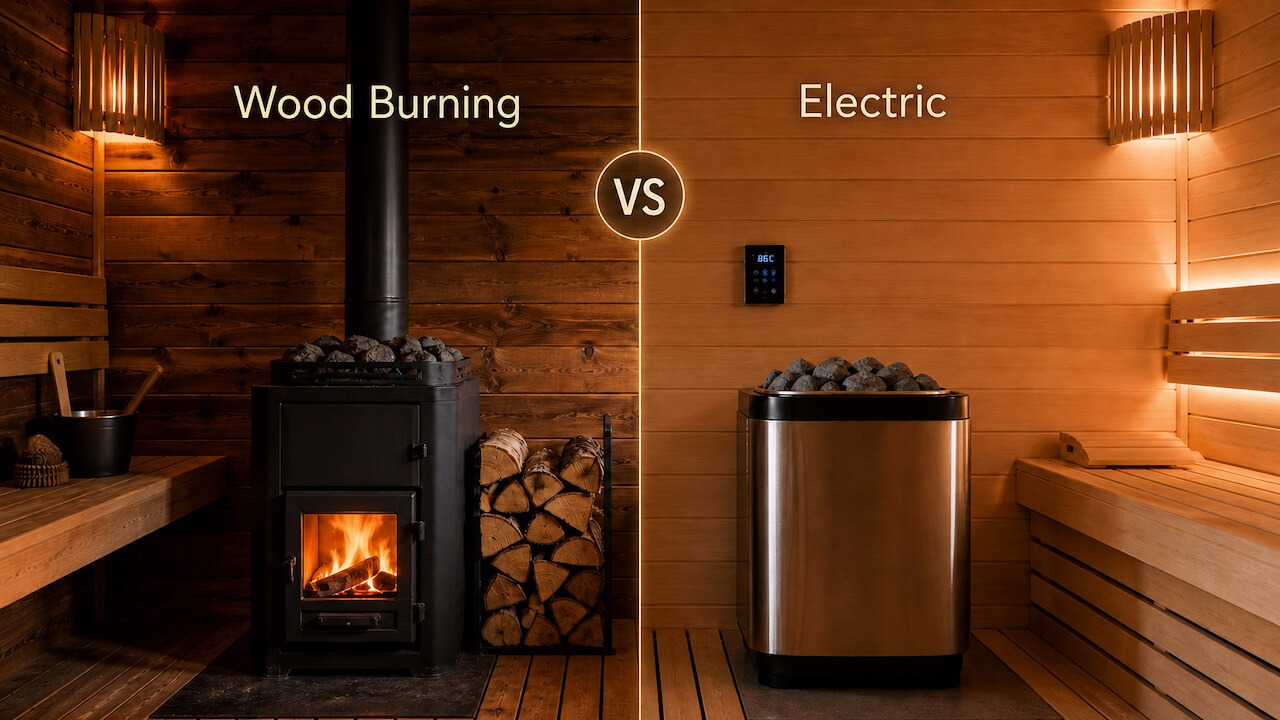
Wood Fired vs Electric Sauna: Quick Comparison
| Factor | Wood-Fired Sauna | Electric Sauna |
|---|---|---|
| Heating | Firewood | Electric elements |
| Heat control | Manual | Precise |
| Heat-up | Usually slower | Usually faster |
| Installation | Chimney and fire clearances | Dedicated electrical supply |
| Maintenance | Higher | Lower |
| Off-grid use | Excellent | Requires power |
| Best use | Cabins, retreats, outdoor settings | Frequent home use |
These differences affect convenience and installation, but sauna performance also depends on heater sizing, stones, ventilation and insulation.
Electric vs Wood Sauna: 6 Differences That Actually Matter
In an electric vs wood burning sauna comparison, the choice is not only about tradition versus convenience. The differences become most noticeable in heat quality, temperature control, installation, operating cost, maintenance, and daily use.
Heat and Löyly
Good löyly depends more on stone temperature, stone mass, heater design and ventilation than on the energy source itself.
Many wood burning sauna stoves can hold a large amount of stones, which some users feel creates softer, longer-lasting steam. However, a well-designed electric sauna heater with sufficient stones can also produce excellent löyly.
In practice, the quality of the sauna stone heater system matters more than whether it burns wood or uses electricity.
Heat-Up Time and Temperature Control
Electric heaters are generally easier to start and control. A thermostat keeps the temperature relatively stable, while timers and digital controls make spontaneous sessions more convenient. Many electric saunas reach around 70–80°C in roughly 30–45 minutes, while wood-fired saunas often take around 60–90 minutes.
Wood heaters also require lighting and tending the fire. Actual heating time varies with sauna volume, insulation, outdoor temperature, wood moisture and heater output.
Installation
An electric sauna heater normally requires the correct voltage, a dedicated electrical circuit and a heater output matched to the sauna volume. Professional electrical installation is usually recommended or required.
A wood-burning stove needs a chimney or flue, suitable ventilation, fire-resistant protection and proper clearance from combustible surfaces. Local fire and building regulations may also apply.
Running Cost
There is no universal winner on running cost. The better option depends on local electricity prices, firewood cost and availability, heater efficiency, insulation and how often the sauna is used.
Cheap or readily available firewood can make wood heating economical, particularly for longer sessions. For shorter, frequent sessions, electric heating may be more practical because it is easier to start and shut down.
Maintenance
Electric heaters generally require little routine maintenance beyond checking sauna stones, heating elements and controls periodically. Wood-burning systems need more hands-on care, including removing ash, inspecting the firebox and chimney, keeping the flue clean and storing dry firewood.
Wood heating therefore requires more ongoing involvement, while electric heating is easier for users who want minimal maintenance.
Convenience and Daily Use
How often you plan to use the sauna can be one of the clearest deciding factors.
If you want a sauna ready after work several evenings a week, electric heating is usually easier to live with.
If the sauna is part of a slower weekend routine at a cabin, retreat or vacation property, lighting and tending a wood fire may feel like part of the experience rather than extra work.
Wood Burning Sauna vs Electric: Which Is Better for Your Project?
When planning a backyard or cabin build, your location usually dictates the best choice. Here is how to decide based on your specific environment.
Choose an Outdoor Sauna with Wood Stove If
- You are building near a remote cabin or an off-grid location.
- Running a heavy electrical cable from your main house to the end of the yard is too difficult or expensive.
- You have a large backyard where wood smoke won't bother close neighbors.
- You value the traditional, rustic experience of tending to a fire.
Choose an Outdoor Electric Sauna If
- Your sauna is located close to your main house or on a residential patio.
- You plan to use the sauna frequently (3–5 times a week) and want fast start-ups.
- You live in a dense neighborhood where smoke and local fire regulations are a concern.
- You prefer to set an exact temperature without having to monitor a firebox.
Conclusion
Ultimately, neither option makes an automatically "better" sauna. A poorly insulated wood sauna will feel drafty, and an undersized electric heater will struggle to warm the room.
The secret to a great sweat isn't just the fuel you use—it is making sure your heater size, room volume, insulation, and ventilation all work together as a complete system.
Whether you want the push-button ease of an electric unit or the rustic charm of a wood-fired setup, getting the configuration right is what matters most.
Need Help Choosing the Right Sauna Setup?
Choosing between a wood burning sauna and an electric system is only one part of planning a reliable setup. Heater output, room volume, insulation, ventilation, stone capacity, power supply, and safety clearances all need to work together.
If you are unsure which outdoor sauna heater suits your space, explore Sipher Sauna’s complete home and commercial sauna solutions. Our product range includes sauna rooms, electric and wood-fired heaters, sauna stones, controls, and supporting accessories.
Whether you are planning a wood fired outdoor sauna, an outdoor electric sauna, or upgrading an existing sauna room, our team can help you match the heater and components to your project.
Contact Sipher Sauna to discuss your setup and request a tailored recommendation.
Frequently Asked Questions
Is a wood-burning sauna better than an electric sauna?
Not universally. It depends entirely on your lifestyle and location. Wood-burning is better for off-grid areas and traditionalists, while electric is better for residential homes and people who want quick, daily access to their sauna.
Does a wood sauna get hotter than an electric sauna?
As long as the heater's kilowatt (kW) or BTU rating is correctly sized for the cubic volume of your sauna room, neither will have trouble getting hot.
Can you pour water on an electric sauna heater?
Yes. As long as it is a heater designed for traditional sauna use, pouring water over the hot sauna stones to create steam is completely safe and expected. Just be sure to pour water on the stones, not directly on the bare heating elements.
Why do some people prefer wood-heated saunas?
If you look at communities like Reddit, enthusiasts usually point to three specific reasons: 1. Better airflow, because the fire naturally pulls fresh air into the room; 2. Larger stone mass, as wood stoves often hold more rocks, creating a softer, longer-lasting steam; and 3. The ritual, because the smell of wood smoke and the sound of crackling fire create a deeply relaxing atmosphere that electricity can't replicate.
Need Expert Consultation?
Our sauna specialists are ready to help you design the perfect home wellness space.
Get in Touch