Explore the different types of outdoor saunas, from traditional barrel cabins to modern infrared and steam models. Read our guide to find the perfect outdoor sauna for your project.
Outdoor saunas differ in more than appearance. The heating system changes the temperature and humidity, while the structure affects seating, heat retention and installation.
This guide compares the main options so you can quickly narrow down the right sauna for your home or commercial project. For a complete planning checklist, see our outdoor sauna buying guide.
4 Types of Outdoor Saunas by Heating Method
Start with the experience you want. Traditional, steam, infrared and hybrid saunas produce heat in different ways and have different utility requirements.
Outdoor Traditional Sauna
An outdoor traditional sauna uses an electric or wood-burning heater to heat the room and a basket of sauna stones. It normally operates at a higher temperature than infrared and steam models.
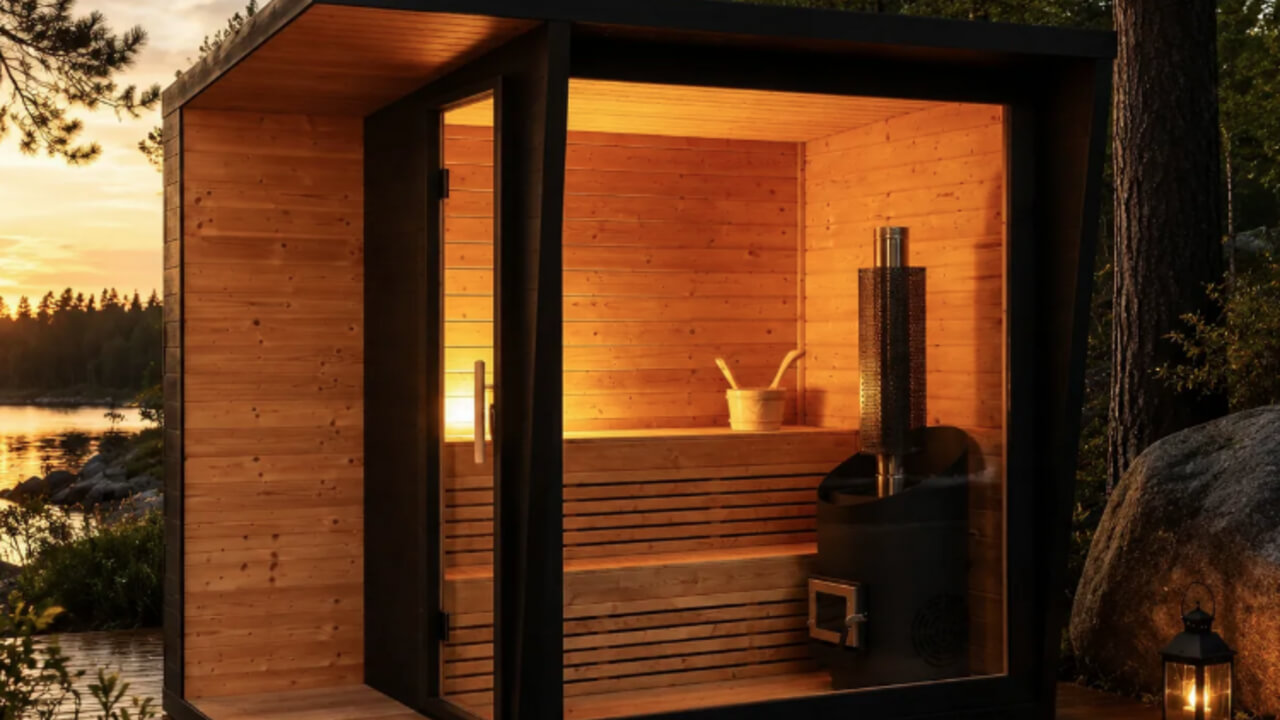
Water can be poured onto compatible hot stones to create a short burst of steam known as löyly. Without added water, the same room can be used as an outdoor dry sauna.
Traditional heating is best for people who want:
- High temperatures
- Adjustable humidity
- A classic Finnish sauna experience
- A choice between electric and wood-fired heating
Traditional models are available as cabins, cubes and traditional barrel saunas. Compact two-person models suit home use, while larger traditional outdoor sauna kits offer more seating and installation flexibility.
Outdoor Steam Sauna (Wet Saunas)
An outdoor steam sauna uses a generator to fill an enclosed room with warm vapor. It operates at a lower temperature than a traditional sauna but maintains very high humidity.
This system is a good choice for people who prefer moist heat. However, an outdoor wet sauna requires more specialized construction than a dry sauna. The enclosure needs waterproof surfaces, effective vapor sealing, floor drainage and suitable ventilation.
Steam generators also require water, electricity and routine descaling. Check these requirements before comparing two-person or four-person models.
Outdoor Infrared Sauna
An outdoor infrared sauna uses infrared panels to warm the body rather than heating the room to traditional sauna temperatures. Most models provide a milder environment and require little or no preheating.
This type is suitable for users who prefer gentle heat, simple controls and shorter daily sessions. A 2-person outdoor infrared sauna is usually sufficient for couples, while four-person models provide more bench space.
Common infrared systems include:
- Far infrared: The most widely used option for steady, lower-temperature heating
- Full spectrum infrared: Combines near-, mid- and far-infrared wavelengths
- Infrared with red light: Adds separate red-light panels or LEDs; this feature should not be confused with infrared heating itself
Outdoor Hybrid Sauna
An outdoor hybrid sauna combines infrared panels with a traditional electric heater and sauna stones. Users can select gentle infrared heat or a hotter traditional session with löyly.
Hybrid models offer greater flexibility but usually cost more and have more complex electrical requirements. They are most suitable for households, resorts and wellness facilities that want to provide more than one sauna experience in the same cabin.
6 Types of Outdoor Saunas by Shape and Design
After selecting the heating method, compare the available space, bench layout, weather exposure and preferred style.
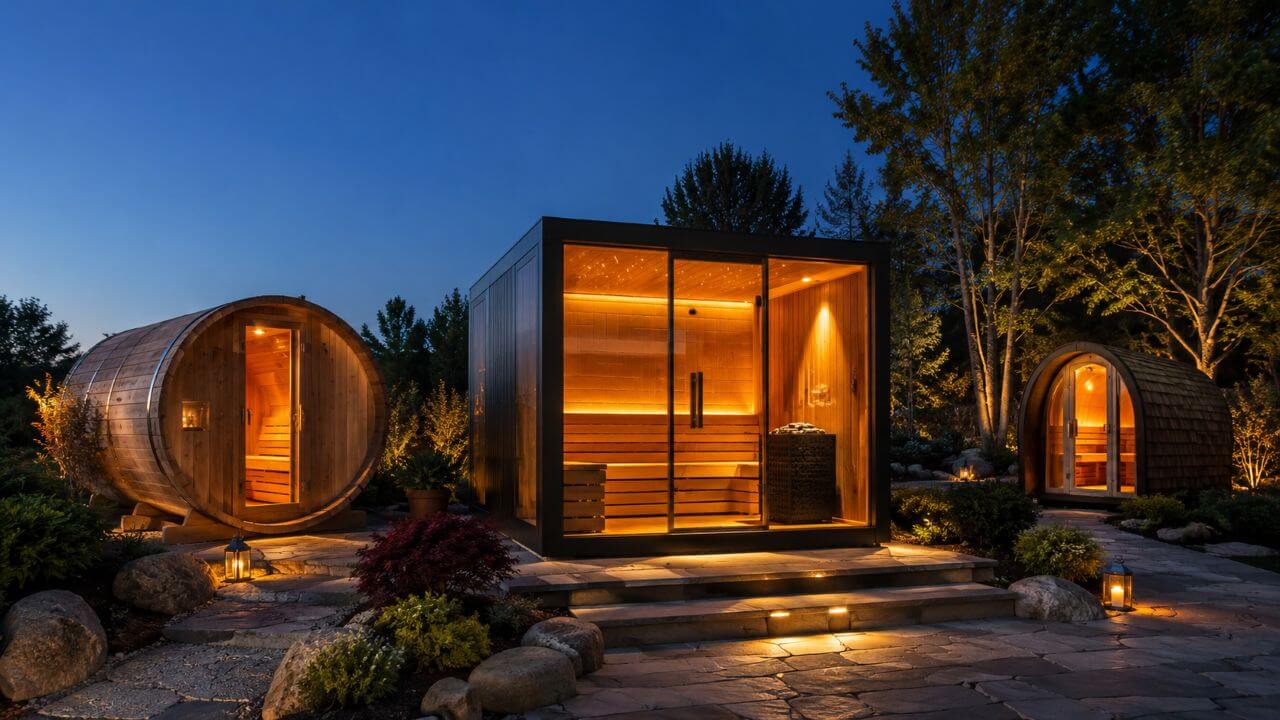
Outdoor Barrel Saunas
An outdoor barrel sauna has a compact cylindrical structure. Its curved walls reduce unused interior air, which can help the room warm up quickly.
Most models have two straight benches facing each other. They fit smaller backyards but provide less headroom and fewer seating options than cabin designs. Cedar and Thermowood are common materials for a traditional barrel sauna.
Some manufacturers also offer an elongated oval or round wooden sauna. Check the interior dimensions rather than choosing by exterior shape alone.
Cabin Outdoor Saunas
Cabin outdoor saunas have straight walls and a pitched or sloped roof. The rectangular interior provides more headroom and supports wide, multi-level or L-shaped benches.
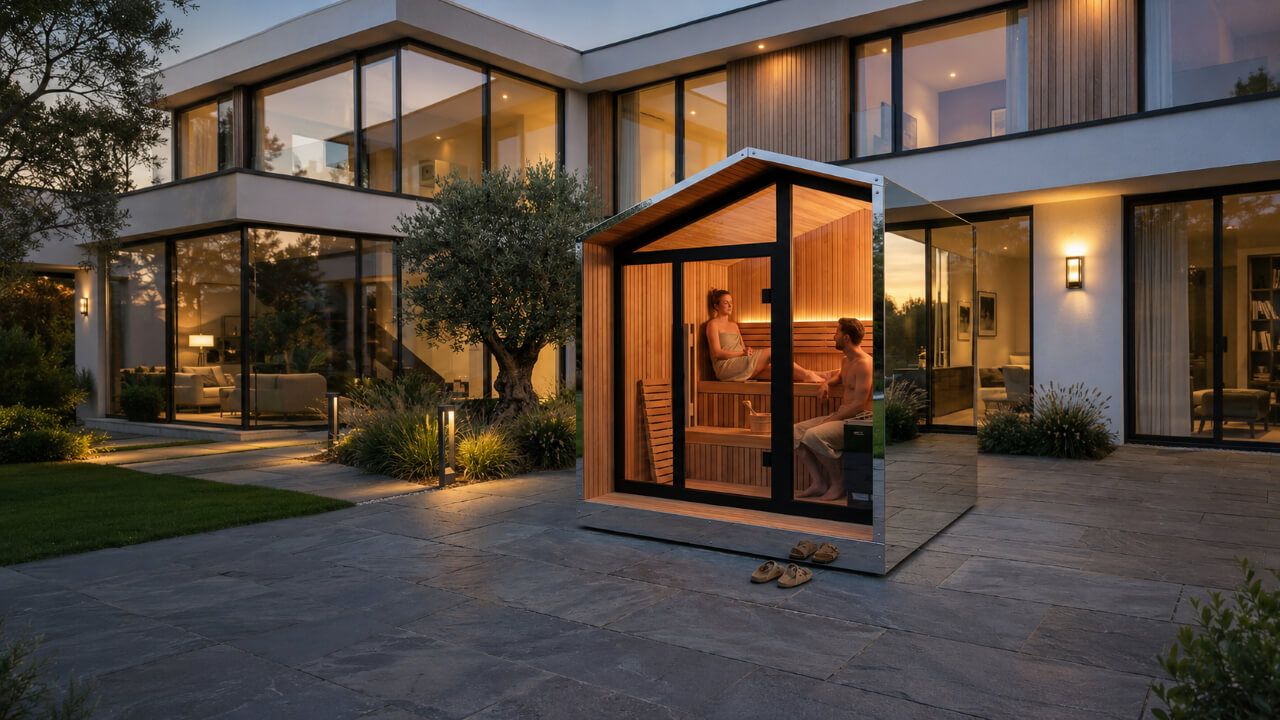
Choose a cabin if you want to lie down, seat more users or add a changing room. Insulated walls also make cabin models a strong option for year-round use in cold climates.
Cube Saunas
Cube saunas combine a rectangular interior with a clean, modern exterior. Straight walls maximize usable space and make upper and lower benches easier to install.
Large glass fronts create an open view but increase heat loss. Include the glazing area when calculating the required heater output.
Pod Saunas
Pod saunas have a rounded or teardrop-shaped roof and a wider base. They offer more headroom than many barrel models without taking up as much space as a full cabin.
The curved roof sheds rain and snow well. Depending on the size, the interior may include facing benches or a compact two-level layout.
Outdoor Corner Sauna
An outdoor corner sauna fits into an unused corner of a patio, garden or backyard. It is useful when the installation area is small or irregular.
Angled doors or glass walls can make the room feel more open. Before ordering, measure the door swing and allow space for utilities and maintenance.
Portable Outdoor Saunas & Tents
Portable outdoor saunas suit temporary use, renters and sites where permanent construction is restricted. They require less preparation and can be stored when not in use.
A portable sauna tent uses heat-resistant fabric with a compatible heater. Some models are intended for patios, while others are designed for camping. Follow the specified ventilation, clearance and fire-safety instructions.
How to Choose an Outdoor Sauna That Fits Your Needs?
The right sauna should fit your site, climate, preferred heating experience and installation plan. Check these four factors before requesting a quote.
1. Assess Your Installation Site
Start with the available space and ground conditions. The base must be level, stable and well drained.
Barrel and pod saunas can often sit on gravel, pavers or a reinforced deck. Heavier cabin and cube models may require a concrete foundation. Check the manufacturer’s installation requirements before preparing the site.
Also allow enough space for:
- Door opening
- Electrical or chimney connections
- Maintenance access
- Rainwater drainage
- Privacy from neighboring properties
2. Select the Wood and Wall Construction
Choose the wood based on climate, appearance and maintenance needs.
- Cedar: Moisture-resistant with a strong natural aroma
- Hemlock: Smooth, light-colored and nearly scent-free
- Nordic spruce: A traditional and cost-effective sauna wood
- Thermowood: More stable under changing outdoor temperatures and humidity
See our guide to the sauna wood types for a detailed comparison.
For cold climates, also check the wall and roof insulation, door seals and glazing area. Large glass panels lose more heat and may require a larger heater.
3. Check the Heater and Utility Requirements
The heater must match the sauna’s interior volume. Glass doors, windows and other uninsulated surfaces increase the required heating capacity.
Electric saunas usually need a dedicated 240V circuit. Wood-burning models require a suitable chimney, heat shielding and safe clearance from combustible materials.
Before ordering, confirm:
- Heater output
- Voltage and phase
- Electrical panel capacity
- Chimney requirements
- Local building and fire regulations
4. Choose Between Pre-Built and Kit Models
Choose a pre-built sauna if you want to reduce on-site assembly. Choose an outdoor sauna kit if access is limited or you need greater installation flexibility.
Do not compare prices alone. Check what the package includes, such as the heater, controller, benches, roofing and lighting. You should also review delivery conditions, assembly instructions, warranty coverage and replacement-part availability.
Sipher Sauna provides customized dimensions, wood choices, heating systems and international voltage options. OEM and ODM services are also available for distributors, resorts and commercial wellness projects.
FAQ
Barrel sauna vs cabin sauna: which is better?
Neither is universally better; it depends on your needs.
Choose a barrel sauna for a compact footprint, faster heating and a rustic appearance.
Choose a cabin sauna for more headroom, flexible benches and better insulation options. Actual performance depends on construction quality and heater size.
What size sauna heater do I need?
Calculate the sauna’s internal volume: length × width × height. Add extra volume for glass, stone and other uninsulated surfaces, then follow the heater manufacturer’s recommended kW range. Do not select a heater by seat count alone.
Which is healthier, steam or infrared sauna?
Neither has been proven healthier overall. Steam saunas provide moist heat, while infrared saunas operate at lower air temperatures. Choose the option you can use safely and comfortably.
What is the healthiest type of sauna?
There is no single healthiest type. Traditional saunas have the strongest long-term research base, but safe and consistent use matters more than the heating method. Stay hydrated and avoid excessively long sessions.
Which type of sauna is best for reducing inflammation?
Currently, science has not established one specific type of sauna as vastly superior for inflammation. Heat therapy in general improves blood flow, which can aid in muscle recovery and joint stiffness. Sauna use is an excellent complementary wellness practice, but it should not be treated as a medical cure for inflammatory diseases.
Need Expert Consultation?
Our sauna specialists are ready to help you design the perfect home wellness space.
Get in Touch